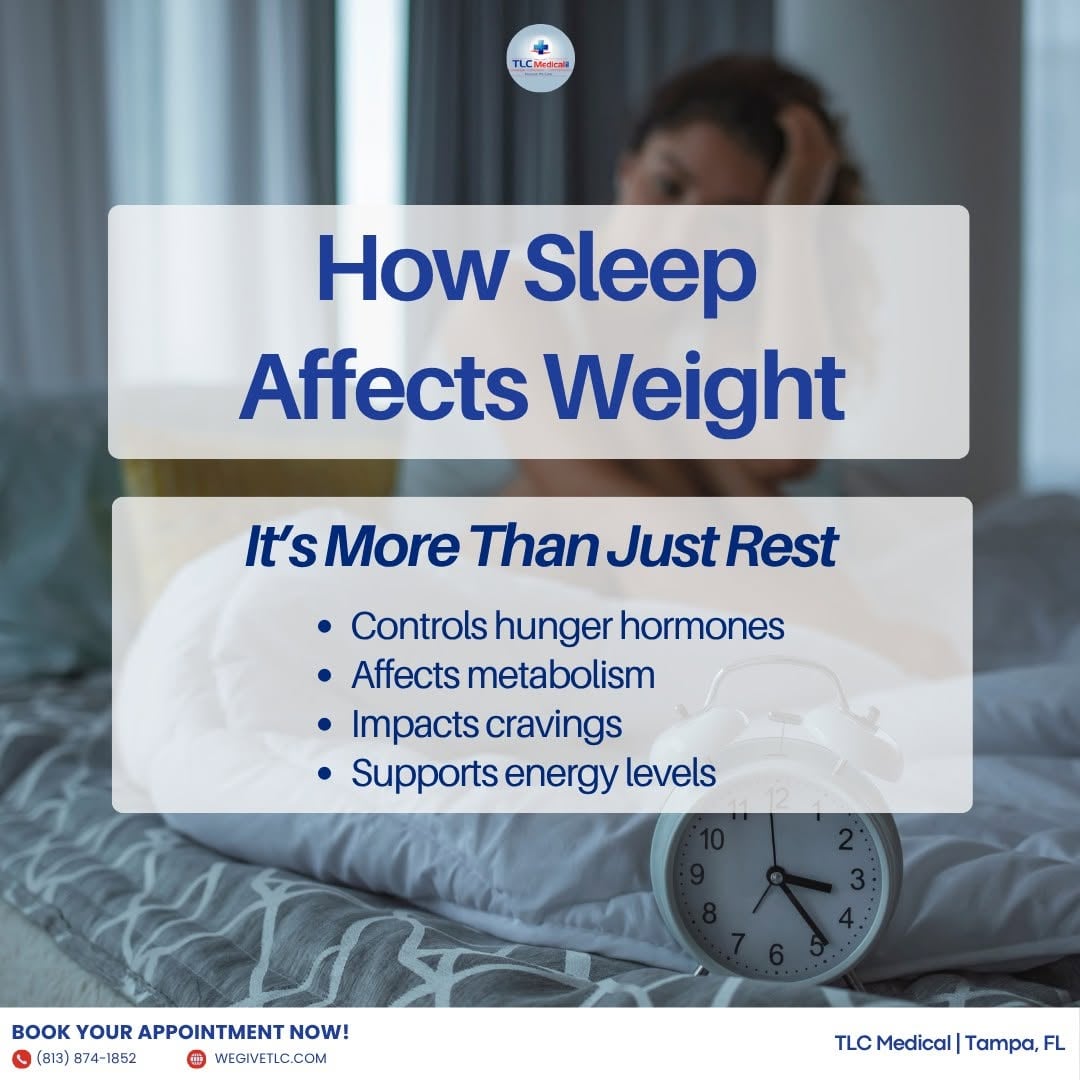
When people think about weight management, they often focus on diet and exercise. However, one of the most overlooked factors is sleep. Getting enough quality sleep plays a major role in how your body regulates hunger, burns calories, and maintains energy throughout the day.
Sleep directly affects hormones that control appetite, including ghrelin and leptin. When you don’t get enough rest, ghrelin levels rise, making you feel hungrier, while leptin levels decrease, reducing the feeling of fullness. This combination can lead to increased snacking and overeating, especially cravings for sugary and high-calorie foods.
Poor sleep can also slow your metabolism and make it harder for your body to efficiently use energy. Feeling tired often reduces motivation to stay active, making regular exercise more difficult. Over time, these effects can contribute to weight gain and make losing weight more challenging.
The good news is that improving your sleep habits can support your overall weight loss journey. Aim for seven to nine hours of quality sleep each night, maintain a consistent bedtime, and limit screen time before bed.
At TLC Medical, we understand that successful medical weight loss involves more than medication or diet alone. Our team takes a comprehensive approach, helping patients build healthier habits—including better sleep—to achieve lasting, sustainable results and improve overall wellness.